
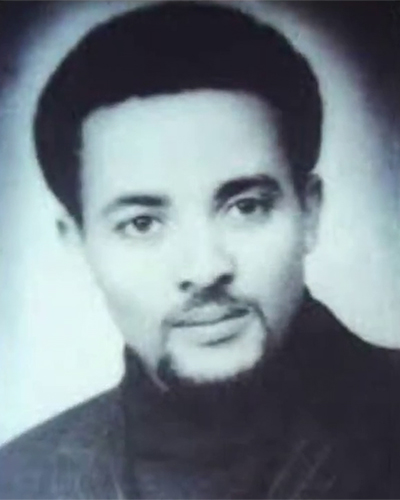
Tilahun Gessesse (Amharic: ጥላሁን ገሠሠ; 27 September 1940 – 19 April 2009) was an Ethiopian singer Wikipedia calls one of the most popular artists of the twentieth century. The page says he was noted for a tenor voice and nicknamed “The Voice” in the 1960s Golden Age. The infobox years are 1955–2009 and the label is Ethio Grooves. Birthplace on that page is Waliso, Shewa, now in Oromia, not Addis Ababa. The ethio.music artist stub says he was born in Addis Ababa; this profile follows Wikipedia, which also matches the Library of Congress birth date of 27 September 1940 and death date of 19 April 2009. Some older pages, including a 2009 Ethiopian Review biography that Wikipedia itself cites, say Addis Ababa and 29 September. Where those conflict, the current Wikipedia lead is what is used here, and the conflict is stated rather than smoothed over.
Wikipedia, citing that Ethiopian Review account, says he was born to Gessesse Negusse and Gete Gurmu and attended Ras Gobena Elementary School in Waliso, where his grandfather lived and wanted him on schoolwork. The principal, Shedad, encouraged the music. When Hager Fikir Theatre artists, including Eyoel Yohanes, performed at the school, Eyoel told him to go to Addis Ababa if he wanted the career. He left school at thirteen, started on foot without consent, was caught in Tulu Bolo and sent back, and left again hidden in a loaded truck.
In Addis Ababa he was hired by the Hager Fikir Association, now the Hager Fikir Theatre, then joined the Imperial Bodyguard Band and became a leading singer. Wikipedia says that during the December 1960 coup attempt by the Imperial Bodyguard he came into conflict with the government and was imprisoned for a time; the page flags that passage as needing clarification. He moved to the National Theatre. The article says his tenor was regarded as the best Ethiopian pop voice of the 1960s and that he appeared three times before Emperor Haile Selassie I. A BBC report on 20 April 2009, “Ethiopian emperor’s singer dies,” calls him the dominant figure in Ethiopian music for more than half a century, notes that he had been lead singer in the imperial bodyguard band, and says his tenor sang of love, family, and friendship as well as liberty, unity, and justice. The BBC also reported a state funeral and that radio and television interrupted programmes for tributes.
Recordings in the 1970s and 1980s raised money for famine relief. Most are in Amharic; Wikipedia says he also recorded a few in Oromo. The discography lists an eponymous Amha LP (1975), Ethio-Grooves volumes in 1992, Wegen Alegne (1995), Andand Negeroch (1999), and Greatest Hits (Ethio Sound, 2000), plus Philips singles beginning with “Yehagere Shita” (1970). He is on Éthiopiques Volume 17 (Buda Musique, 2003). From 1983 he re-recorded older LPs with the Walias. The Ethio-Grooves CDs used musicians including Abegasu Kibrework, Fasil Wuhib, and Theodros Mitiku. He received an honorary doctorate from Addis Ababa University and a lifetime achievement award from the Ethiopian Fine Art and Mass Media Prize Trust. The page also records a stabbing on Ethiopian Easter Sunday in 1993, after which he continued to record.
He died on 19 April 2009 in Addis Ababa while his wife was taking him to hospital, shortly after returning from the United States. Wikipedia and the BBC both attribute the poor health of his last years to diabetes. A candlelit vigil was held in the National Theatre garden on 22 April. On 23 April a state funeral included a gathering in Meskel Square and a mass at Holy Trinity Cathedral. Wikipedia says about one million people gathered. A year later, the article says, Tamagn Beyene played a sample of the unfinished Kome Limerkish, begun around 2003 and released in 2021, produced by Abegasu Kibrework.
For ethio.music charts he is a legacy name. This profile does not point at a fan reupload. When a label issue is the source, the credit is Ethio-Grooves, Philips, Amha, or Buda Musique, as on the discography above.
Sources: Wikipedia, Tilahun Gessesse (fetched 29 September 2026); BBC News, 20 April 2009; Library of Congress name authority. Artist stub: /artist/tilahun-gessesse.
Related: Aster Aweke, who names him among the singers she followed, and the ethio.music charts.





One Comment